
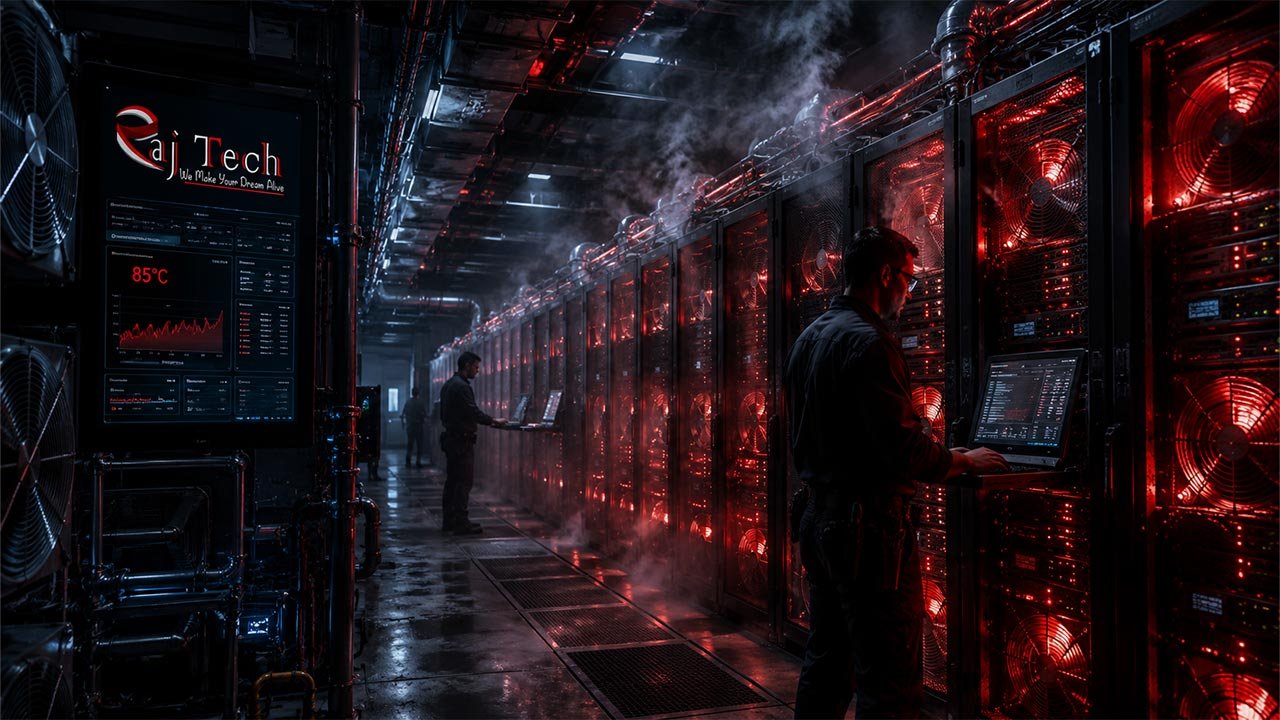
A few months ago, a software engineer posted a strange photo online while discussing the growing trend of AI servers in Iceland and the massive cooling problems facing modern artificial intelligence infrastructure. The image showed the inside of a giant AI data center somewhere in the United States. There were no windows, barely any lights, and rows upon rows of black server racks stretching endlessly into the distance. But what caught people’s attention wasn’t the machinery. It was the steam.
The room looked like an industrial boiler plant.
Massive cooling systems were pumping cold air through the facility while thousands of processors worked nonstop training artificial intelligence models. Heat rolled off the servers so intensely that the contrast between the chilled air and the machinery created visible vapor inside parts of the building.
The image quickly spread across technology forums because it exposed something most people never think about when using AI.
Artificial intelligence may feel invisible on a phone screen, but behind every chatbot response, AI-generated image, or smart recommendation system is an enormous physical infrastructure consuming staggering amounts of electricity.
Why AI Servers in Iceland Are Becoming So Important
And those machines are getting hotter than the tech industry expected.
Very hot.
Over the past two years, companies racing to dominate AI have quietly started facing a problem that sounds surprisingly simple: how do you stop powerful AI servers from overheating without spending insane amounts of money?
That question is now changing the geography of the internet itself.
Instead of building giant AI facilities near traditional technology hubs, companies are increasingly looking toward colder regions of the world. Places where nature can help solve the cooling crisis that modern AI has created.
And one country, more than almost any other, keeps appearing in those conversations.
Iceland.
At first glance, Iceland seems like an unlikely candidate to become important in the global AI race. It has a small population, sits in the middle of the North Atlantic Ocean, and is better known for volcanoes, glaciers, and northern lights than data centers.
Yet behind the scenes, Iceland has quietly become one of the most strategically valuable locations for next-generation AI infrastructure.
The reason has less to do with software and far more to do with physics.
The Problem Nobody Talked About During the AI Boom
When people discuss artificial intelligence, most conversations focus on what AI can do.
Will AI replace jobs?
Some people wonder whether it can write software better than humans. Others are fascinated by its ability to generate movies, create realistic images, or completely reshape education. And in the middle of all that excitement, a growing number of experts are asking a more serious question: could AI eventually become dangerous?
What rarely gets discussed is the hidden industrial side of AI.
Modern artificial intelligence requires an extraordinary amount of computing power. Training advanced models involves billions or even trillions of calculations happening continuously across thousands of specialized chips.
Those chips consume huge amounts of energy.
And nearly all that energy eventually turns into heat.
For years, traditional data centers were relatively manageable. They stored websites, cloud files, business applications, and streaming services. They certainly consumed electricity, but the thermal demands were predictable.
Artificial intelligence changed that balance almost overnight.
The rise of large language models and generative AI dramatically increased the demand for high-performance graphics processors, commonly known as GPUs. Companies suddenly needed facilities capable of supporting dense clusters of hardware running at maximum capacity around the clock.
That shift transformed data centers from ordinary server facilities into something closer to industrial power plants.
One engineer working in AI infrastructure described it bluntly during an interview with a European tech publication:
“People think AI is software. At scale, it’s basically thermodynamics.”
That statement sounds exaggerated until you understand how modern AI servers actually operate.
Why AI Servers Produce So Much Heat
Most consumer computers are designed for occasional heavy workloads. A laptop might get warm while editing videos or playing games, but it also spends a lot of time idle.
AI systems are different.
When companies train advanced machine learning models, processors operate under sustained stress for days or even weeks without interruption. Thousands of GPUs perform parallel calculations simultaneously while consuming enormous electrical power.
A single modern AI server rack can require several times more electricity than traditional server infrastructure.
And electricity always creates heat.
Lots of it.
This has created what many inside the industry now call the AI cooling problem.
The challenge is no longer just building faster chips. Companies also need practical ways to keep those chips alive.
Without proper cooling:
- processors lose performance
- systems become unstable
- hardware lifespan decreases
- energy consumption increases further
- operational costs rise dramatically
At extreme temperatures, servers can simply fail.
That is why cooling systems have become just as important as the computing hardware itself.
The Growing Cost of Cooling AI
One of the least glamorous realities of modern AI is that cooling infrastructure can cost astonishing amounts of money.
In warm climates, giant industrial chillers must continuously cool server rooms. Massive fans move air across processors while refrigeration systems consume huge quantities of electricity trying to maintain safe temperatures.
The hotter the environment outside, the harder the cooling systems must work.
This creates a frustrating cycle.
AI servers consume electricity. That electricity generates heat. Cooling systems consume even more electricity to remove the heat. That additional electricity creates additional costs.
As AI models become larger, the problem intensifies.
Some estimates suggest that future AI data centers could consume as much electricity as small cities.
That reality has forced technology companies to rethink a very basic assumption.
Maybe the best place to build AI infrastructure isn’t where the tech workers live.
Maybe the best place is wherever the weather is cold.
Why AI Servers in Iceland Are Becoming Important
Iceland possesses several characteristics that make it unusually attractive for AI infrastructure.
The most obvious advantage is temperature.
Unlike countries that experience intense summer heat, Iceland remains naturally cool throughout most of the year. Average temperatures stay low enough that outside air can often assist with server cooling.
For data center operators, this is incredibly valuable.
Instead of relying entirely on energy-hungry mechanical refrigeration, facilities can use cold external air to help regulate temperatures inside the building.
This process is commonly referred to as free cooling.
Despite the name, it isn’t literally free. Infrastructure still needs to be built and maintained.
But compared to operating massive industrial cooling systems in hot climates, the savings can be enormous.
In some regions, cooling alone represents one of the biggest operational expenses for AI infrastructure.
Iceland reduces that burden naturally.
That single advantage changes the economics of large-scale AI operations.
How Geography Affects AI Servers in Iceland
For decades, the internet created the illusion that geography no longer mattered.
Cloud computing felt placeless.
People streamed movies, sent emails, uploaded files, and used apps without thinking about where the physical machines actually existed.
AI is changing that perception.
Suddenly, geography matters again.
Cold climates matter. Cheap electricity matters. Reliable infrastructure matters. Renewable energy matters.
The physical environment surrounding a data center can now directly affect how efficiently artificial intelligence operates.
That is a major shift.
Countries once considered technologically peripheral are now becoming strategically important because of climate and energy advantages.
And Iceland sits directly in the middle of that transition.
Renewable Energy: Iceland’s Biggest Strength
Cold air alone is not enough to power AI.
Data centers still require massive amounts of electricity.
This is where Iceland gains another enormous advantage.
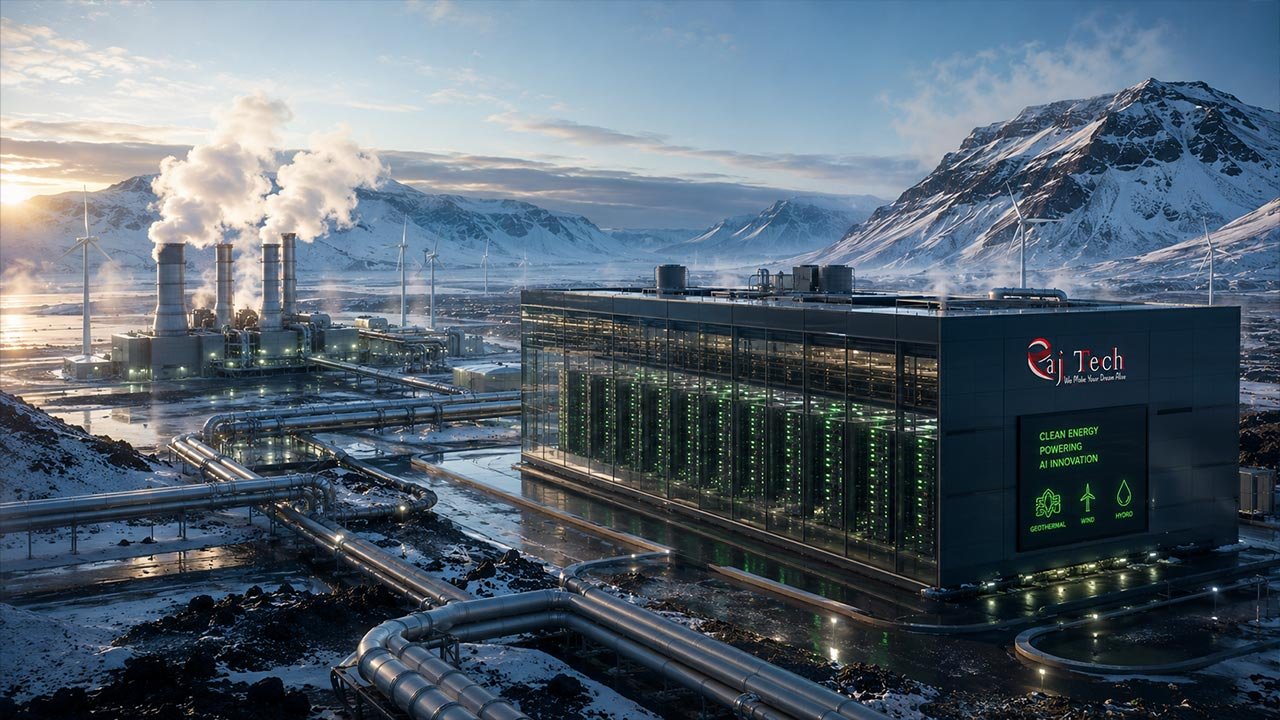
The country generates nearly all of its electricity from renewable energy sources.
Most of that power comes from:
- geothermal energy
- hydroelectric power
Iceland’s volcanic geology gives it access to extraordinary geothermal resources. Underground heat generated by volcanic activity is used to produce stable electricity year-round.
Unlike solar power or wind power, geothermal energy does not depend heavily on weather conditions.
It provides continuous baseload energy.
That stability is extremely important for AI infrastructure because large data centers cannot afford interruptions.
AI training workloads often run continuously for long periods. Even short outages can become expensive.
For technology companies under increasing pressure to reduce carbon emissions, Iceland offers something extremely attractive:
large-scale renewable power combined with naturally cold temperatures.
In other words, Iceland helps solve both the energy problem and the cooling problem simultaneously.
The Environmental Impact of AI Servers in Iceland
Artificial intelligence is often marketed as futuristic and efficient.
But behind the marketing, AI currently consumes enormous physical resources.
Training advanced models requires:
- electricity
- water
- cooling infrastructure
- industrial hardware
- large construction projects
As global AI adoption accelerates, environmental concerns are becoming harder to ignore.
Researchers have already warned that AI could significantly increase global electricity demand during the next decade.
That creates a strange contradiction.
Many companies want AI to help solve climate problems.
>But AI itself can become energy intensive.
This tension is one reason the industry has become obsessed with green AI infrastructure.
Technology companies increasingly want facilities powered by renewable energy because they know public scrutiny will intensify as AI expands.
Building massive AI facilities on fossil fuel-heavy electrical grids creates terrible optics.
Building them in Iceland sounds far more sustainable.
Inside a Modern AI Data Center
To understand why Iceland matters so much, it helps to imagine what a modern AI data center actually looks like.
Forget the image of a quiet office server room.
Large AI facilities resemble industrial complexes.
Rows of densely packed server racks stretch across giant warehouse floors. Thick power cables run beneath raised platforms. Cooling ducts move huge volumes of air continuously. Backup systems monitor every possible environmental fluctuation.
Temperature management becomes almost obsessive.
Some facilities contain thousands of specialized GPUs operating together in coordinated clusters.
These processors are incredibly powerful.
They are also extremely expensive.
Companies cannot risk overheating them.
That is why engineers constantly search for better cooling methods.
Traditional air cooling still exists, but newer approaches are becoming increasingly important.
Liquid Cooling Technology for AI Servers in Iceland
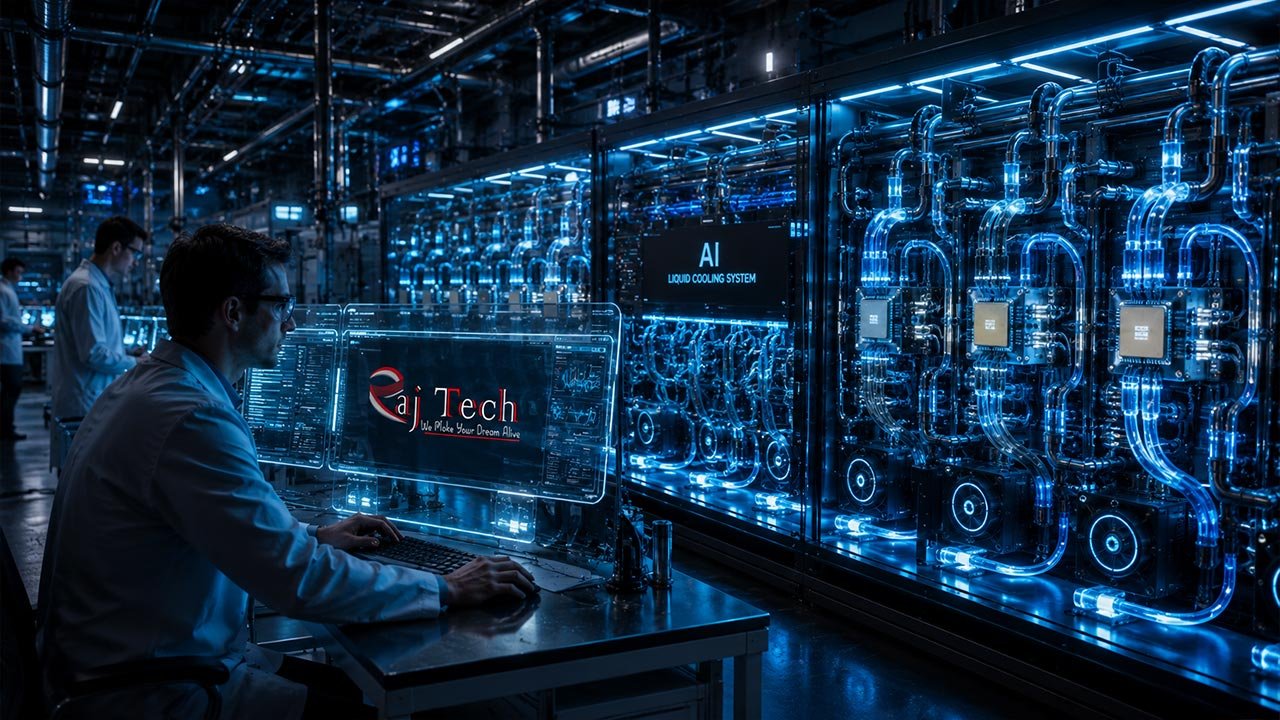
One major trend in AI infrastructure is liquid cooling.
Air simply struggles to remove enough heat from extremely dense AI systems.
Liquids transfer heat far more efficiently.
In direct-to-chip cooling systems, cold liquid flows through metal plates attached directly to processors. Heat transfers into the liquid, which then circulates away from the hardware.
This approach allows much higher computing density while reducing some of the limitations associated with traditional airflow cooling.
And Iceland’s climate makes these systems even more efficient.
Cold external temperatures help remove heat from the liquid cooling loops more effectively.
That combination lowers energy usage.
Lower energy usage means lower operational costs.
For companies spending billions on AI infrastructure, those savings matter enormously.
The Future May Belong to Immersion Cooling
Some engineers believe even liquid cooling may not be enough for future AI systems.
That has pushed interest toward immersion cooling.
This technology sounds almost futuristic.
Instead of using fans or airflow, entire server systems are submerged in special non-conductive cooling fluids.
The liquid absorbs heat directly from the hardware.
Because the fluid does not conduct electricity, the servers continue operating safely underwater.
Immersion cooling can dramatically reduce temperatures while improving efficiency.
Facilities using this technology are often much quieter because they require fewer high-speed cooling fans.
Many experts believe cold-climate countries like Iceland could become ideal locations for large-scale immersion cooling facilities.
The environmental conditions naturally support the thermal management systems these advanced facilities require.
Why Cold Countries Are Competing With AI Servers in Iceland
Iceland is not alone in recognizing this opportunity.
Several northern countries are competing aggressively to attract AI infrastructure investment.
Norway promotes its cold fjords and renewable energy resources.
Sweden highlights its hydroelectric power and stable connectivity.
Finland has experimented with using waste heat from data centers to warm nearby residential buildings.
All of these countries understand the same thing:
AI infrastructure is becoming a new form of strategic industry.
The next generation of economic competition may depend partly on who can host the world’s computational infrastructure most efficiently.
That competition extends beyond technology companies themselves.
Governments increasingly recognize that AI infrastructure creates jobs, energy investment, connectivity upgrades, and geopolitical importance.
The countries that become central to global AI operations may gain long-term economic advantages.
The Hidden Infrastructure Behind Chatbots
Most users never think about any of this.
When someone opens a chatbot app, the interaction feels immediate and simple.
A question goes in. An answer comes out.
What remains invisible is the enormous infrastructure operating behind the scenes.
Every AI interaction depends on:
- fiber optic networks
- electrical grids
- cooling systems
- semiconductor manufacturing
- massive data centers
- energy production
Artificial intelligence is not just software.
It is a giant industrial ecosystem.
And that ecosystem increasingly depends on places capable of supporting extreme computational density efficiently.
That is why Iceland matters.
Can Iceland Handle More AI Servers in Iceland?
Despite its advantages, Iceland also faces limitations.
The country has a relatively small population and limited land suitable for large-scale industrial expansion.
Building giant AI campuses requires:
- transmission infrastructure
- specialized construction
- international connectivity
- long-term energy planning
There are also environmental concerns.
Even renewable energy projects can affect landscapes and ecosystems.
Some local residents worry about whether Iceland should become overly dependent on foreign technology companies.
Others argue that data center expansion could reshape parts of the economy too aggressively.
These debates are becoming increasingly common as global AI investment accelerates.
The Real Reason Companies Want Cold Countries
At its core, the move toward cold-climate AI infrastructure comes down to efficiency.
AI systems are becoming too powerful to ignore the physics surrounding them.
For years, computing followed a predictable pattern:
smaller chips
more performance
lower costs
But AI has disrupted that trend.
Now the industry faces practical physical constraints:
- heat density
- energy supply
- cooling efficiency
- electrical infrastructure
- environmental pressure
Cold countries help reduce some of those pressures naturally.
Nature effectively becomes part of the cooling system.
That reality is reshaping how companies think about the future of computing.
How AI Servers in Iceland Are Changing Global Infrastructure
There is another reason companies care deeply about cooling costs.
Modern AI development is already incredibly expensive.
Training cutting-edge models requires:
- advanced chips
- huge server clusters
- enormous electricity usage
- expensive networking equipment
- specialized engineers
Some AI training projects reportedly cost tens or even hundreds of millions of dollars.
Reducing operational expenses by even a small percentage can save massive amounts of money over time.
That is why companies obsess over efficiency metrics.
A slightly colder climate might sound trivial.
>But at industrial scale, small efficiency gains become financially transformative.
If Iceland allows companies to lower cooling costs while simultaneously improving sustainability goals, it becomes extremely attractive from a business perspective.
AI Infrastructure Is Becoming Geopolitical
Artificial intelligence is no longer just a Silicon Valley story.
Governments increasingly view AI infrastructure as strategically important.
Countries now compete over:
- semiconductor supply chains
- energy security
- data sovereignty
- AI research
- infrastructure investment
Large AI data centers are becoming critical assets.
The nations capable of supporting these facilities may gain influence in the future digital economy.
That is one reason cold northern countries are receiving growing international attention.
They possess resources that suddenly matter very deeply to the AI industry.
What Happens Next for AI Servers in Iceland?
Nobody knows exactly how large the AI industry will become during the next decade.
But most experts agree on one thing:
computational demand is going to increase dramatically.
Future AI systems will likely require:
- larger training clusters
- faster networking
- more electricity
- denser hardware
- better cooling technologies
That means infrastructure challenges will intensify.
The race to build efficient AI ecosystems is only beginning.
And Iceland appears unusually well positioned for this moment.
It offers:
- naturally cool temperatures
- renewable electricity
- political stability
- strong connectivity potential
- environmental advantages
Very few places combine all those characteristics simultaneously.
Why AI Servers in Iceland May Matter More Than Ever
There is something oddly poetic about the direction technology is moving.
For decades, humanity built machines designed to free us from the limits of geography and nature.
Now our most advanced machines are forcing us back into dependence on climate, weather, and natural energy systems.
The future of artificial intelligence may depend partly on volcanic islands, freezing winds, underground geothermal heat, and cold northern oceans.
The industry spent years imagining AI as something virtual and weightless.
But the reality is intensely physical.
AI runs on chips. Chips generate heat. Heat requires cooling. Cooling requires energy. Energy requires infrastructure.
And infrastructure depends on geography.
That is why Iceland suddenly matters.
Not because it became a software superpower overnight.
But because in the race to build increasingly intelligent machines, the world discovered something surprisingly simple:
- Cold air is valuable.
The next time someone opens a chatbot or generates an AI image in seconds, they probably will not think about server racks sitting inside giant facilities near the Arctic Circle.
They will not think about geothermal power plants or freezing North Atlantic winds flowing through industrial cooling systems.
They will not think about the enormous physical machinery required to create the illusion of effortless intelligence.
But that hidden world exists.
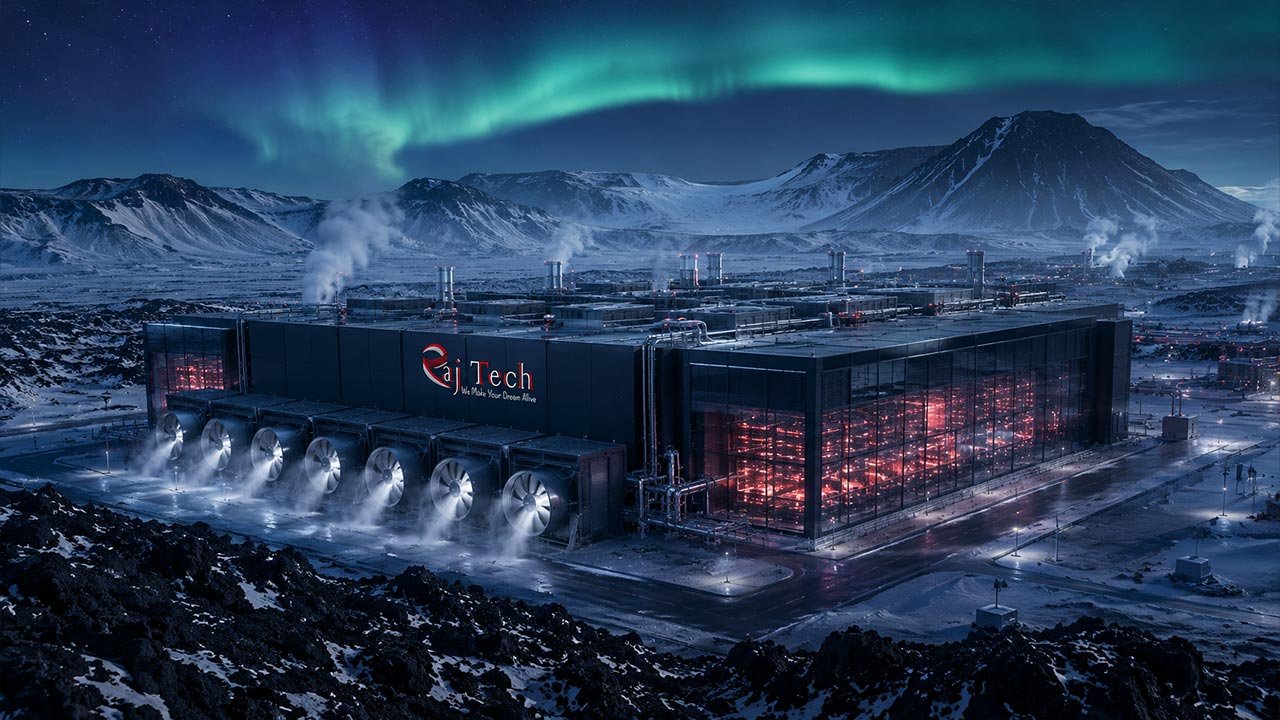
And somewhere in Iceland, thousands of processors may already be working through the night, generating heat so intense that an entire new chapter of global infrastructure is being built around keeping them cool.